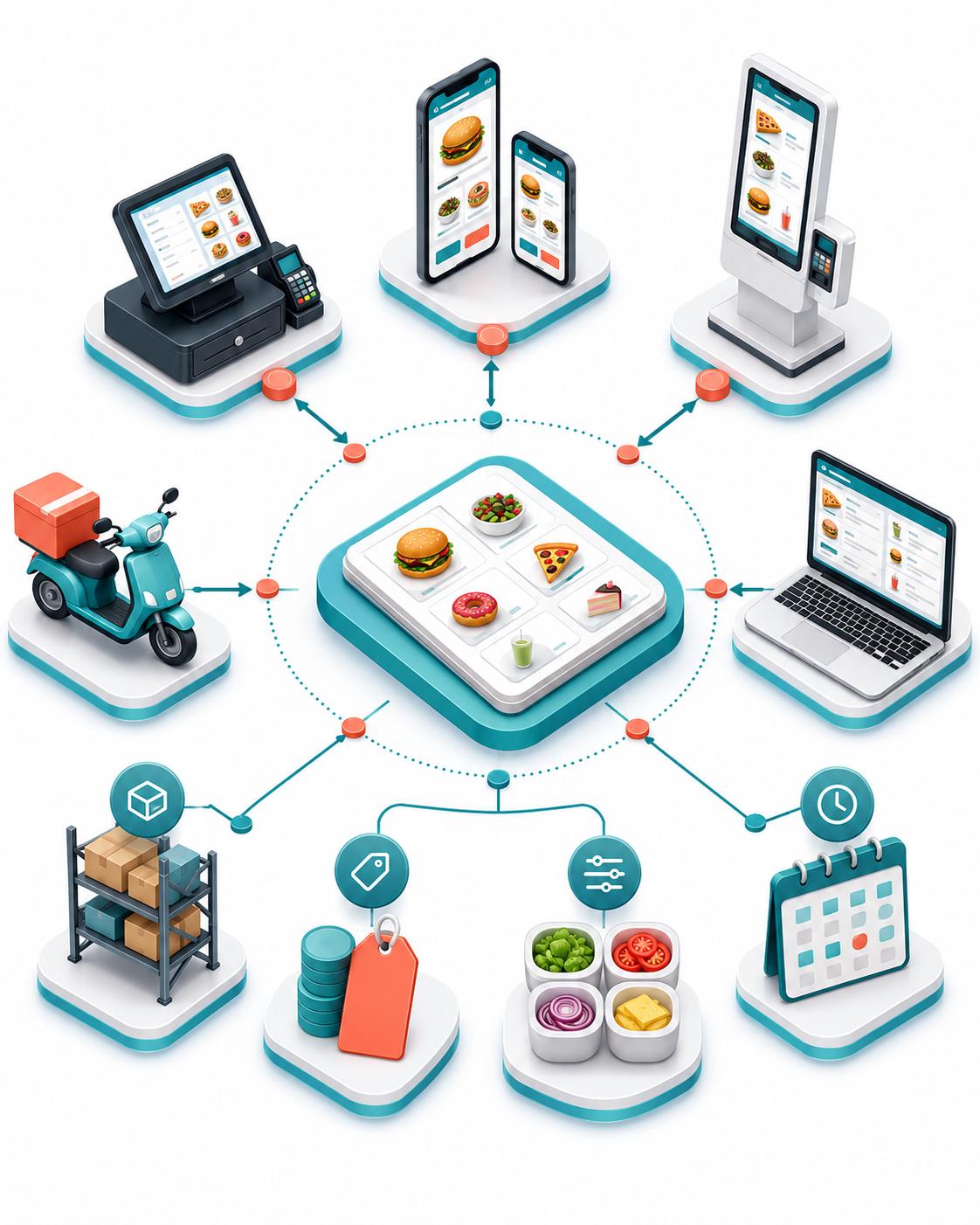
The shift
From a stack to a system.
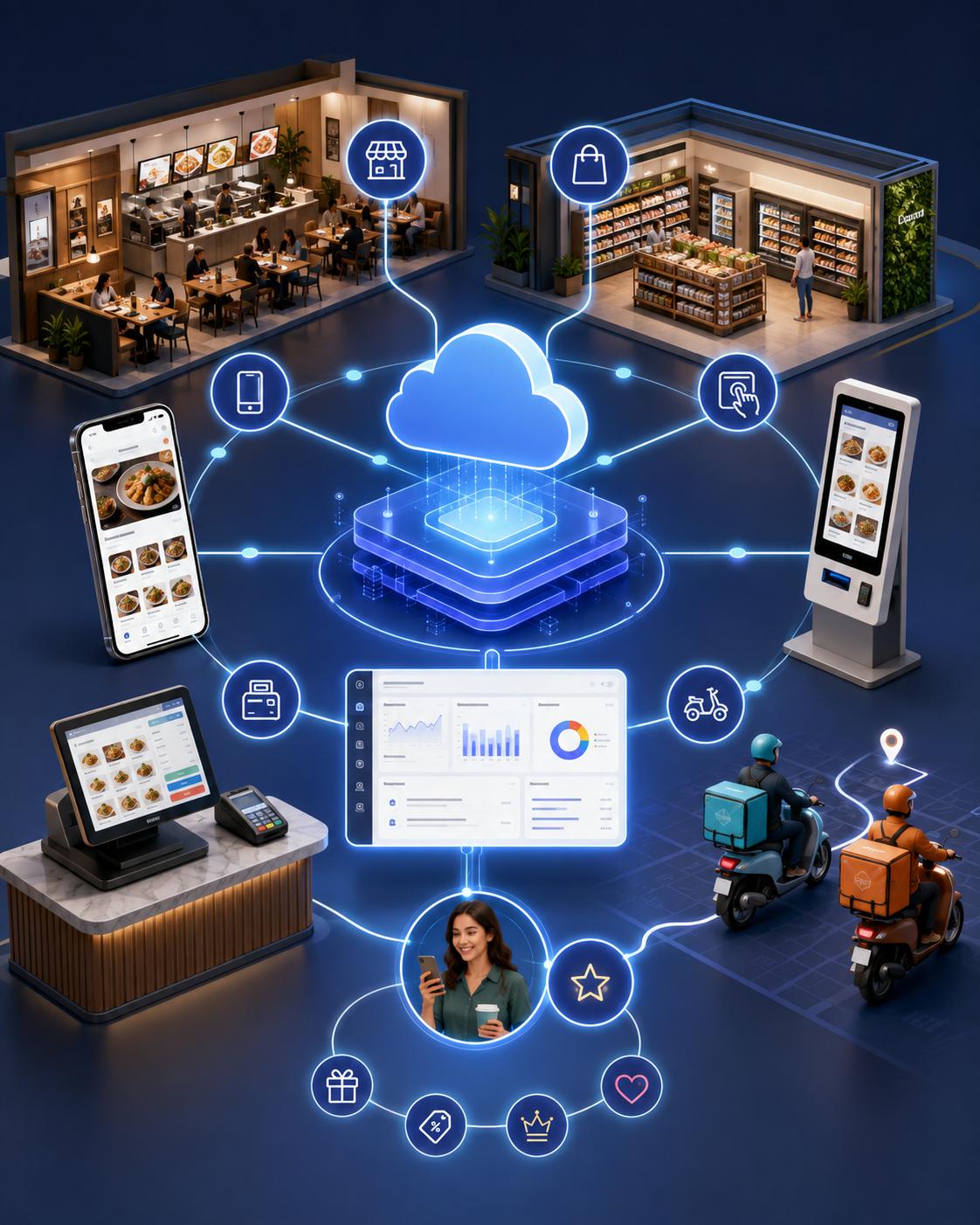
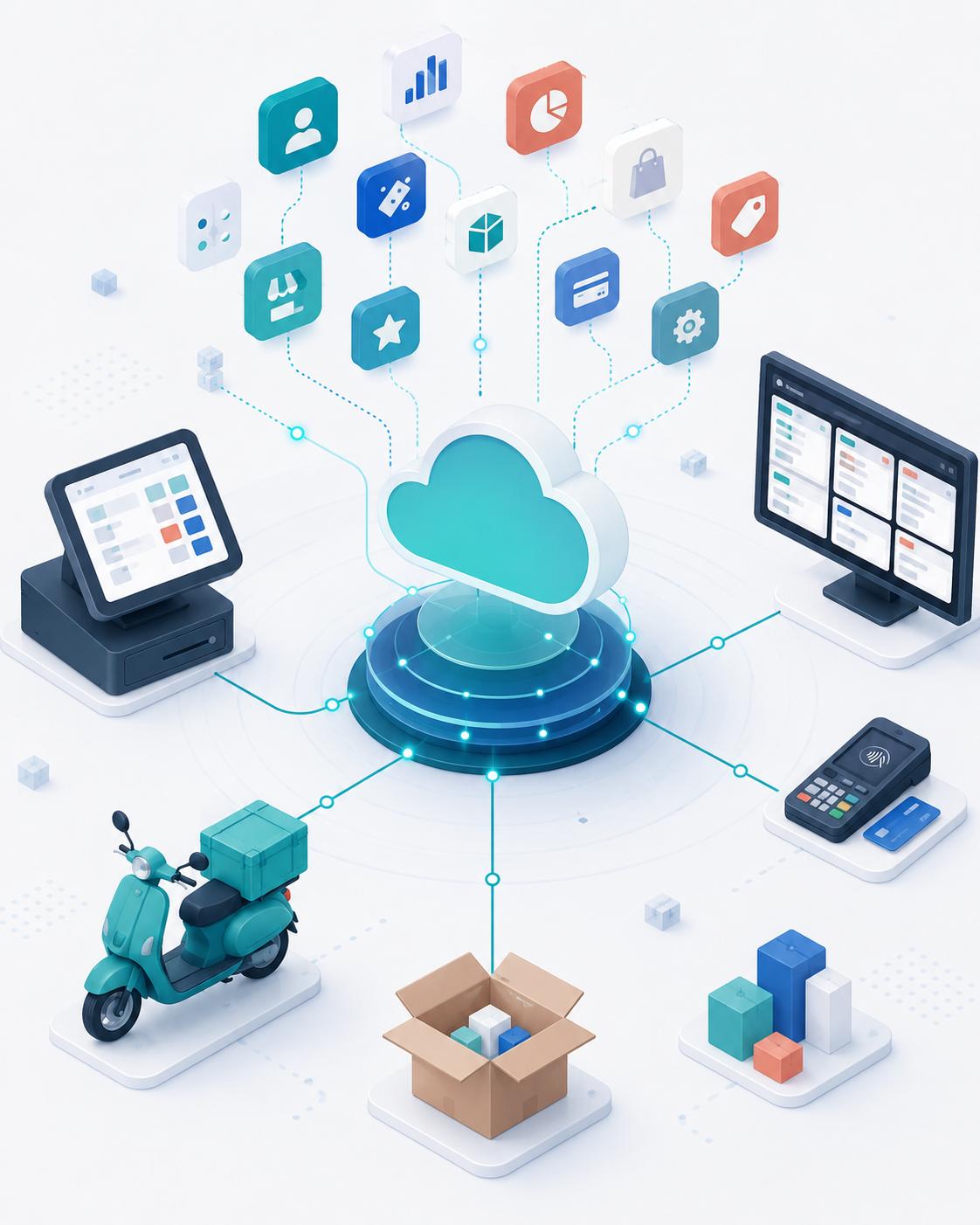
The old model was layered apps. The new reality is a live commerce network — every component affects the customer outcome, and simplicity becomes the strategic differentiator.
One order. Many systems. Ordering channel → menu → payment → POS → kitchen → dispatch → analytics. A missed event along that chain is not "just a bug" — it can become a wrong meal, a refund, a support case, and lost trust.
API-first product experience
Integration is not plumbing.
In API-first SaaS, integrations are part of the product experience — not a technical afterthought bolted on after launch.
Time to connect
How fast a new integration partner can actually go live — the first real measure of API-first maturity.
Self-serve setup
Partners connect without opening a support ticket for every step.
Actionable error recovery
When a sync fails, the system says what broke and how to fix it — not just that it failed.
Partner velocity
How quickly the ecosystem around the platform can ship new integrations, not just the platform itself.
Product-led growth & monetisation
PLG is not a free trial.
For operational B2B SaaS, value must appear progressively — and pricing should follow that same value, not arrive ahead of it.
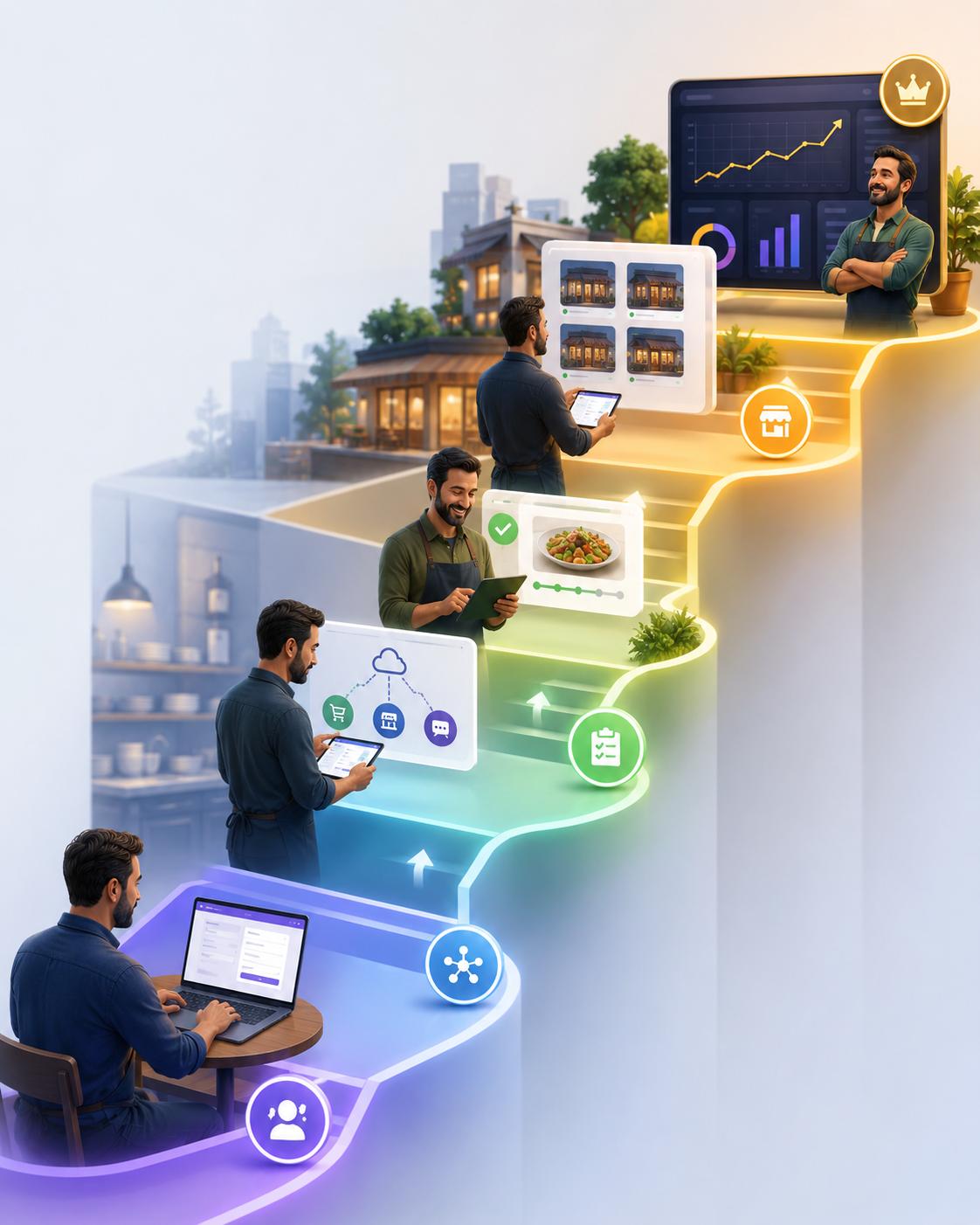
Understand the outcome
Know what "working" actually looks like for this customer before asking them to configure anything.
Connect the first workflow
One real workflow, connected end to end, beats five half-configured ones.
Reach the first success event
The first successful order is the moment the product proves itself — everything before it is setup.
Expand naturally into the next problem
Growth comes from solving the next real problem, not from a feature tour.
Pricing should follow value. Usage-driven tiers work when customers can clearly see why the next step matters — locations live, channels connected, transactions processed, automation unlocked, insights activated.
Measurement & roadmap
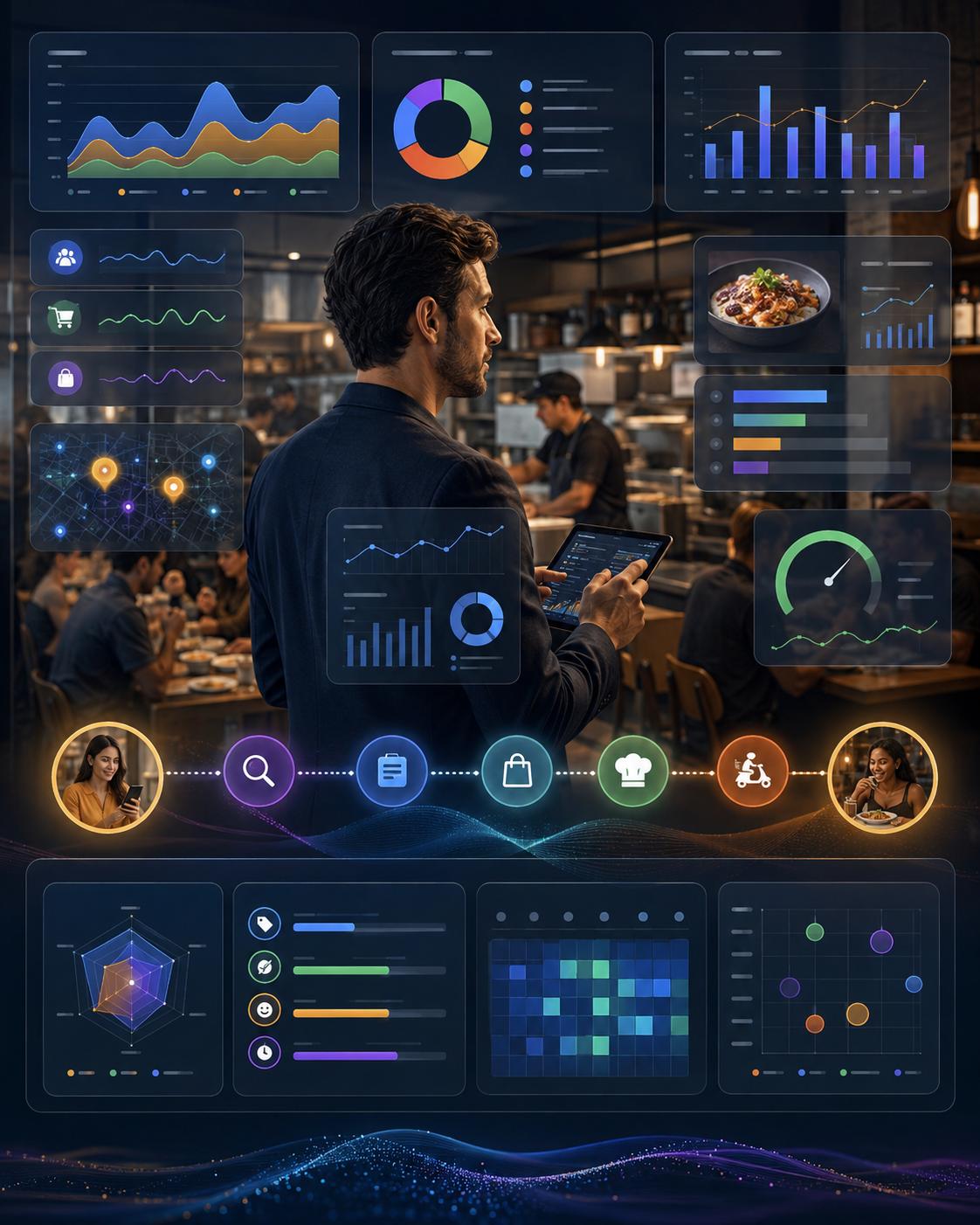
Measure outcomes, not release volume.
More features do not automatically mean more customer value.
Activation
Time to first successful order.
Reliability
Sync success rate, and how fast the system recovers when it fails.
Expansion
More locations and channels connected over time.
Retention
The friction that shows up right before a customer churns.
Build the roadmap around friction, not requested features. Recurring friction patterns, found by asking: where do users stop? What requires support? What blocks expansion? What has measurable operational impact?
Architecture × product
Architecture becomes product strategy.
Technical decisions shape market expansion, partner speed, cost to serve, and trust.
Coupling slows future integrations
Every tightly-coupled shortcut today is a slower integration tomorrow.
Data models shape customer confidence
A data model that can't explain itself can't be trusted with someone's revenue.
Configuration enables enterprise scale
What's configurable without code is what actually scales to enterprise customers.
Observability explains failure and recovery
If you can't see why something failed, you can't promise it won't happen again.
Execution & continuous learning
Influence is the operating system.
Product leadership turns distributed expertise into one shared customer outcome.
Product frames the problem
The problem statement is the highest-leverage artifact a product function produces.
Engineering protects quality
Speed without engineering's own standard just moves the failure downstream.
Design removes friction
Not decoration — the difference between a workflow someone finishes and one they abandon.
Customer teams reveal operational truth
What's actually happening in a restaurant's kitchen, not what the spec assumed.
Weekly releases need weekly learning. Frequent delivery is not proof of progress — validated behaviour change is. Every cycle: form the assumption, ship the smallest meaningful intervention, release it safely, observe the behaviour, then improve, expand or retire it.
The next advantage
Operational simplicity wins.
Restaurants and retailers do not buy technical complexity. They buy simpler operations, stronger revenue and better customer experience.
Operational simplicity isn't a UI preference — it's the strategic differentiator.
Kaustav Das — SaaS Product Builder · Software Architect · Technology Leader
~17 years across engineering, architecture, product delivery and enterprise transformation — spanning hospitality-linked enterprise environments and end-to-end SaaS creation, from concept and architecture to UX, implementation and production delivery.
Product strategy × scalable technology × real-world operational outcomes.
← ziaz.eu
 Ziaz Digital
A white paper
Ziaz Digital
A white paper